
Recovery Room Business Plan: From Layout to Payback
Unused square footage can quietly drain a boutique gym’s earning potential. A strong recovery room business plan turns that space into a measurable profit center by connecting layout, modality choices, pricing, staffing, and payback before equipment is selected.
Model your recovery room economics with the ROI Calculator
A thorough recovery room business plan acts as the map for adding wellness services like cryotherapy or red light therapy to a boutique gym. This plan moves beyond buying gear to solve the financial needs of the gym; it focuses on growing revenue by setting clear use goals. Instead of viewing these tools as a mere perk, the plan treats them as a profit center with a clear path to payback for the owner. A solid plan includes detailed forecasts for membership add-ons and marketing needs to keep the space busy and drive new member sign-ups. By linking these parts, gym owners can build a strong wellness system that makes steady cash while improving the member experience from day one.
Making this move needs a shift in how you view gym square footage. You must look at every foot as a source of income that supports your main fitness offers. The ROI In Wellness operator playbook can help frame that shift. Start by building the recovery room business plan around the profit model.
Build the recovery room business plan around the profit model
Key takeaway: Define revenue per square foot, utilization scenarios, pricing, operating costs, and payback assumptions before selecting equipment.
A solid recovery room business plan starts with a focus on your profit model. You should define your goals before you buy any gear. Many owners buy units and then hope for the best. A better path is to look at your revenue per square foot first. You want your space to earn as much as possible while keeping members happy.
Focus on revenue per square foot
In a small gym, every inch of space must work for you. You can find out how well your space performs by looking at your current earnings. High-performing wellness centers often track how many people use a space at once. By planning your layout well, you can fit more members into your recovery zone. This helps you get more income from a small footprint.
You should also think about how recovery tools help you keep your members. When people feel better, they stay longer. Research shows that consistent gym use leads to better long-term wellness habits. Adding a recovery room gives members a reason to visit your gym every day. This daily touchpoint makes your brand part of their life.
Set targets for use and payback
Your business case must include hard numbers for tool use. We call this utilization. You need to know how many sessions you must sell to break even. A good plan shows your payback period. This is the time it takes for the gear to pay for itself. You can use the site’s business modeling tool to run these numbers based on your own price points.
You should aim for a high rate of use during your peak hours. This ensures you do not have idle assets. For planning, you might test a scenario where four of five units are busy during the morning rush, then compare it with more conservative cases. Higher use can lead to a faster payback. When your gear reaches payback sooner than planned, you can consider adding more wellness equipment. This cycle keeps your gym at the top of the market.
Build a plan for staff and operations
Equipment does not run itself. You need a team that knows how to use it. Your plan should cover operator training for your staff. Well-trained staff can explain the perks of each tool to your members. This helps drive more bookings and keeps your profit model on track. It also keeps your operations safe and smooth.
A strong profit model also looks at your pricing tiers. You might offer recovery as a flat monthly add-on. Some owners prefer a pay-per-use model. Your choice should match your member’s willingness to pay and your revenue goals. By setting these rules early, you build a business that is both stable and scalable. This approach turns a simple room into a core profit center for your studio.
How do you plan the recovery room floor layout?
Key takeaway: Map guest flow, utilities, access, cleaning clearance, privacy, and revenue potential before committing square footage.
A good floor plan is the core of any recovery room business plan. You must balance guest comfort with the need for profit.
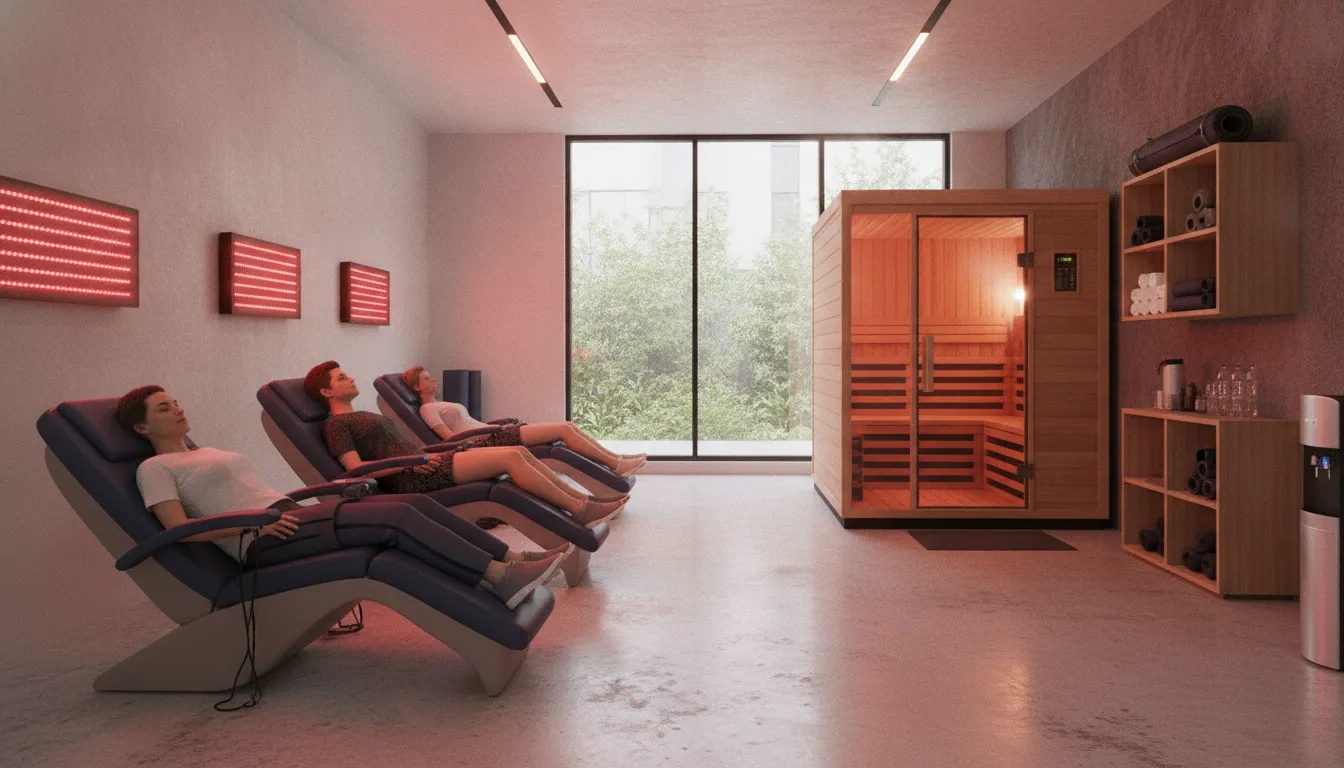
Most gym owners start with too much gear and too little space. This leads to cramped rooms and poor guest flow. To avoid this, you should map your floor area before you buy a single machine. Every square foot must earn its keep. You need to keep enough space for your main training area while adding new revenue streams.
Maximize profit per square foot
Your floor layout should help you reach your financial goals. You must decide how much space to give each tool. High-use gear like red light beds or cold plunges need clear paths. If a room feels too tight, guests will not come back. Use your ROI calculator to see which tools pay for their space fastest. This data helps you pick the right mix of gear for your square footage. It ensures you do not waste money on tools that people rarely use.
Smart layout choices also protect your primary business. You do not want your new recovery zone to crowd out your lifting floor or cardio area. A clear split between the work and recovery zones is best. This keeps the gym vibe high while giving guests a place to cool down. You can use floor markings or different mats to show where the recovery zone starts. This keeps your gym organized and looking professional.
Plan for utility needs
Each recovery tool has unique power and water needs. Cold plunges need floor drains and water lines. Saunas and cryo chambers need high-voltage power. You should group these units near existing lines to save on setup costs. Putting wet tools together also makes cleaning easier. If you place a cold plunge next to a dry stretch area, you risk water damage and slips. Good planning keeps your gym safe and lowers your monthly bills.
Think about airflow too. Saunas create a lot of heat. Cold plunges and cryo units make the air cold and damp. You need a strong HVAC system to keep the room comfortable. If the air gets too stuffy, guests will leave early. Make sure you have enough vents to move the air around each large unit. This prevents mold and keeps the air smelling fresh. It also helps your machines run better and last longer.
Ensure smooth guest flow
Guest flow is how people move through your space. A bad layout creates tight spots where guests get stuck. This ruins the calm vibe of a recovery room. You want a clear path from the front desk to the changing areas and then to the tools. Make sure you follow the ADA standards for accessible design to help all guests move freely. Clear paths make your staff more efficient too.
The following steps will help you build a solid layout for your recovery center.
- Audit your available floor area. Measure your total space and mark any fixed points like pillars or load-bearing walls.
- Group tools by utility needs. Place water-based units together and keep high-power units near your electrical panel.
- Design for privacy and sound. Use partitions or soft materials to block noise from the main gym floor.
- Plan for high-traffic flow. Create wide paths that allow two people to pass without touching.
- Account for cleaning and hygiene. Leave enough space around each unit for your staff to wipe down surfaces easily.
- Preserve training floor area. Ensure your new recovery zone does not crowd out your primary fitness services.
Design for privacy and sound
Recovery is a quiet activity. Guests want to relax after a hard workout. You should use acoustic panels or heavy curtains to dull the sound. Do not place loud pumps or chillers near your massage chairs. If your recovery room is right next to the heavy lifting area, the noise will be a problem. You might need to build small walls or use glass partitions. This creates a quiet feel within your busy gym.
Staff must know how to guide guests through the new layout. Proper operator training ensures your team can manage the flow during peak hours. They should know where guests wait and how to reset each station fast. A well-run floor helps you keep a high use rate. This leads to more member sign-ups and better retention over time. Your layout becomes a tool for growth, not just a place for gear.
Choose a modality mix that earns its footprint
Key takeaway: Compare every modality by demand, throughput, footprint, labor, upkeep, and contribution to the member experience.
Building a good recovery room business plan starts with your choice of gear. You cannot just pick tools because they look cool or are liked by others. Each piece must pay its way by earning more than the cost of the floor space it takes. In a small gym, square footage is your most prized asset. You need to pick a mix that serves many members fast and does not need a large staff to run.
Balance throughput and footprint
Throughput is the number of people who can use a service in one hour. Some tools, like compression boots, let you serve four or five people at once in a small spot. Others, like a large cold plunge tank, might only serve one person every ten minutes and take up much more room. When you plan your space, look for tools that have a high “cash per square foot” chance. This helps you reach your goals fast without needing a bigger building.
You should also think about the time it takes to clean and reset each tool. If a tool needs twenty minutes of work between each use, it will likely lose money. Most gym owners find success by starting with low-touch gear. This lets members use the space on their own. It also keeps your pay costs low. You can find out more about these costs by using our ROI Calculator to see how gear choice impacts your bottom line.
Pick tools based on member demand
Your members will tell you what they want by how often they use it. Red light therapy and saunas are often in high demand because they feel good and are easy to use. These services can be sold as a monthly add-on to a gym membership. This creates a steady stream of cash that makes your work more stable. A good plan should show how these add-ons will cover the monthly lease costs of the gear.
When you choose your mix, keep in mind how each tool stands out from what other gyms offer. If every gym in town has a sauna, maybe a cold chamber is a better choice for you. This helps you win new members who are looking for something new. But you must always check the upkeep needs. Gear that breaks down often will annoy your members and hurt your brand. A solid business plan helps you prepare for these risks before you buy any gear. The U.S. Small Business Administration provides guides on how to write your business plan to ensure you cover all running costs.
| Modality Type | Space Needed | Throughput | Upkeep Level | Staff Need |
|---|---|---|---|---|
| Compression systems | Small (Chair) | High (Multi-unit) | Very Low | None (Self-serve) |
| Infrared Sauna | Medium (Cabin) | Medium | Moderate | Low (Cleaning) |
| Contrast options | Small to Medium | Low to Medium | High (Water) | Moderate |
| Cryo equipment | Large (Chamber) | High | Moderate | High (Guided) |
| Red light systems | Medium (Bed/Panel) | Medium | Low | None |
Focus on labor and growth
Each choice you make changes how your staff works and how your members feel. High-touch tools like cold chambers often need a staff member to be there for safety. This adds to your monthly bills. On the other hand, tools like compression boots are simple for members to use on their own. This lets you offer wellness services even when you have few staff on site. You must train your team to help members use the gear in the right way. Learn more about our operator training to see how to get your team ready for these new services.
Think about how your mix will grow over time. You do not need to buy every piece of gear on day one. Start with the tools that have the highest demand and the lowest risk. As your cash grows, you can add more items to your space. This path keeps your debt low and your cash flow strong. It also lets you learn what your members like before you spend a lot of money on large units that might sit empty. Small wins early on will help you build a much stronger wellness business in the long run.
Set pricing and utilization targets together
Key takeaway: Model pricing and utilization together so each offer supports access, capacity, operating costs, and payback.
Pricing your recovery room is more than just picking a number. It is a core part of your recovery room business plan. You must link your price to how much your members use the space. If you set prices without a plan for use, you might lose money or leave your gear sitting idle.
Link price to member use
Your use rate is the share of time your gear is in use. If you have ten spots and five are full, your use rate is 50 percent. This number tells you if your price is right. High use shows value, but 100 percent use can be a problem. It means members might have to wait, which can hurt their time at the gym.
Test a range of use goals rather than treating one rate as universal. For example, model 50, 70, and 80 percent use during busy hours, then see how each scenario changes access and payback. If use trails your plan, review the offer and promotion. If members frequently cannot book, it might be time to adjust pricing or add capacity. You should use an ROI Calculator to model these paths. It shows how small changes in use can lead to big gains in profit.
Track your work stats
To run your business, you need clear data. You should track your busy hours, average visit time, and total visits per day. These stats help you see how your room is working. The Small Business Administration says that tracking your costs and goals is the best way to stay on track. By knowing your costs, you can set a price that covers your gear, staff, and rent.
One key stat is earnings per square foot. Recovery rooms often have high earnings per square foot. This is because the gear is small and can serve many people each day. When you know this number, you can make smart choices about how to use your space. You can also plan for your payback time. This is the time it takes for the gear to pay for itself.
Use upgrades and add-ons
There are many ways to charge for recovery. One of the best is the membership upgrade. You can offer a “Recovery Tier” that gives members full access to the room for a flat monthly fee. This builds steady cash flow and keeps people coming back. It also makes recovery a part of their daily habit.
You can also offer add-ons for one machine. Some high-end machines work well as a pay-per-use service. You can also group services into bundles. A “Post-Workout” bundle might include red light and compression. This makes it easy for members to buy and use the room.
Plan for booking and staff help
A good booking system is a must. It helps you avoid crowds and gives members a smooth path to use the gear. It also gives you a way to track use in real-time. When members can book from their phone, they are more likely to use the room often. This leads to more use and better member retention for your gym.
Your staff plays a big role in this too. They should be able to explain the benefits of each service without making medical claims. Proper operator training ensures your team can handle the gear and talk to members with ease. When your staff is sure, your members will be too. This leads to more people using the room and a stronger business.
Model staffing, operations, and payback before launch
Key takeaway: Assign operating ownership, document daily workflows, and test multiple payback scenarios before launch.
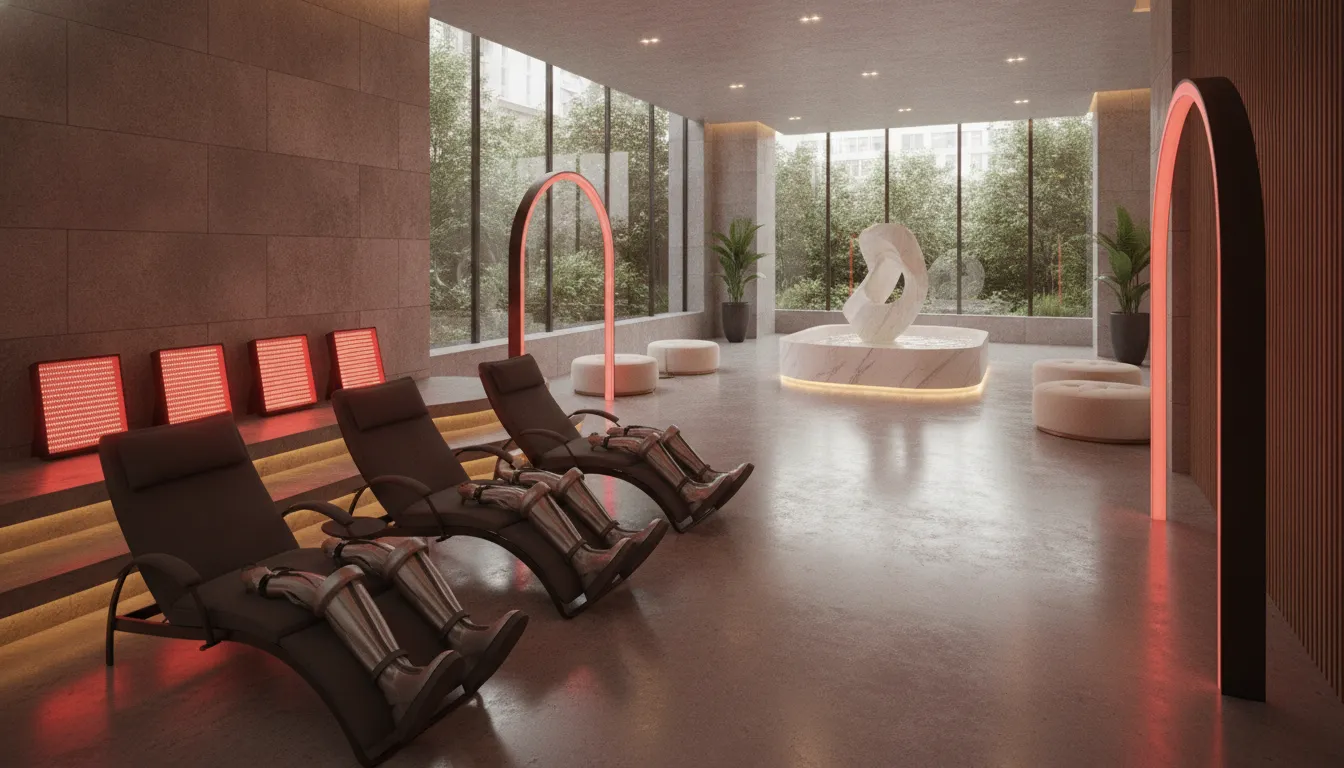
Building a strong team structure
A strong recovery room business plan starts with people. You do not need a large team to run a high-working wellness zone, but you do need the right roles. Most small gyms find that their current staff can handle the daily tasks. But you must define who owns the space. Your front desk team should manage check-ins, while a lead staff member handles the deeper tech needs. This person ensures every tool is ready for use and that the gear stays in top shape.
New staff training is the next step. Every team member must know how to use the gear and tell members about the perks. They do not need to be doctors, but they must be experts on the machine settings. We suggest a clear operator training plan for all new hires. This makes sure that your staff can answer questions without making medical claims. When your team is sure, they can better sell the value of the recovery room to your gym members.
Good training also covers the why behind each piece of gear. Your team should know why a member might choose red light over a cold plunge on a certain day. This helps with member success and builds a better vibe. When the staff feels like experts, they take pride in the space. This pride leads to better care for the tools and a more welcoming feel for your clients.
Daily flow and booking rules
Smooth flow depends on a clear booking path. In your recovery room business plan, you must decide how members will reserve their time. Many studios use their current gym software to manage these slots. Booking ownership should rest with the member, but your staff must check the schedule. This stops over-crowding and keeps the flow steady. If the room feels too busy, the member’s time in the gym drops in value, and use suffers.
Cleaning is a must for the daily flow. Tech like cold plunges and saunas needs daily checks. You should set a timer for cleaning between each use. This keeps the space fresh and builds trust with your clients. A clean room is a high-stay room. Per the U.S. Small Business Administration, a strong plan for how you work is key to long-term growth and funding. By writing down your cleaning and booking rules now, you avoid stress later.
You also need to think about the physical flow of the room. Where do people put their bags? Where do they change? These small details can make or break a recovery room business plan. If the layout is hard to use, people will not come back. Aim for a layout that feels open and easy to walk through. This makes it easier for your staff to clean and for your members to relax. A good flow keeps the room moving and keeps your profits high.
Payback and ROI models
The final piece of your recovery room business plan is the money model. You should not guess at your future gains. Instead, use a model based on your real costs and planned use. Start with your gear lease or buy price. Then, add in your monthly costs for staff, power, and cleaning tools. Most gym owners aim for a payback time of 12 to 18 months.
To find your true path to profit, you must look at income per square foot. Wellness rooms often earn more per foot than open gym space. You can charge for single visits, monthly passes, or as an add-on to current member plans. We suggest using our ROI Calculator to test different plans. By plugging in your own numbers for member count and price, you can see exactly when the room will pay for itself. This data-first path takes the risk out of your launch.
Keep in mind that your numbers will change over time. Your first few months might have lower use as people learn about the new space. Your recovery room business plan should account for this ramp-up time. By staying focused on the data, you can adjust your prices or your ads to stay on track. This helps you reach your payback goal faster and ensures your wellness room is a win for both your members and your bottom line.
Frequently Asked Questions
How much space do I need for a recovery room?
A 300 to 500 square foot recovery zone is one practical planning example for a mix of tools like red light beds and compression gear. The right size depends on your selected modalities and facility. You should focus on your layout to make sure guest flow is smooth and use is high. Small spaces work best when you plan for income per square foot. Use a clear floor plan to fit the right tools without making the area feel tight for your members.
What insurance is required for recovery equipment?
You should update your main insurance plan to cover wellness services like cryotherapy or saunas. Most firms need to see your staff training plans and safety rules before they give you a policy. It is vital to work with a pro who knows the wellness field to make sure you have the right safety. Having solid waivers and staff training helps lower your risk. This keeps your business safe while you add new income to your gym.
How do I sell recovery memberships to gym members?
The best way to get sales is by showing members how recovery helps them every day. You can offer a free trial to let them try the tools first. Many owners use a tiered model where recovery is a monthly add-on. This creates steady cash and helps keep your members for a long time. Make sure your staff can show the wellness perks of each tool. Use your gym app to make booking easy for everyone.
How long is the payback period for recovery tools?
Payback varies by acquisition cost, pricing, utilization, staffing, and operating expenses. Model conservative, expected, and strong-demand scenarios instead of relying on one timeline. You can use an ROI Calculator to find your break-even point. Focus on how much people use the gear to speed up your return on cost. Keeping your space full during peak hours is the best way to hit your goals.
Are you ready to build a recovery room that pays for itself?
Key takeaway: Turn your assumptions into a measured plan, then validate the economics before committing to a build.
Every month you wait to add recovery tools is a month of lost cash from members who go to other local gyms in your area. Starting your business plan now gives you the time to get the floor plan right so you do not waste money on a poor setup. Taking this first step today makes sure your gym stays ahead of others while building a new path to long term gains for your gym.
Ready to see the math for your own gym? Review how ROI In Wellness approaches operator success, request a recovery business audit, or contact the team to discuss your plan.