
Gym Staff Training for Recovery Modalities Guide
Recovery equipment does not create utilization by itself. In a boutique studio or mid-market gym, the member experience depends on whether staff can explain the modality clearly. Operate it consistently, and connect it to a service the business can deliver profitably.
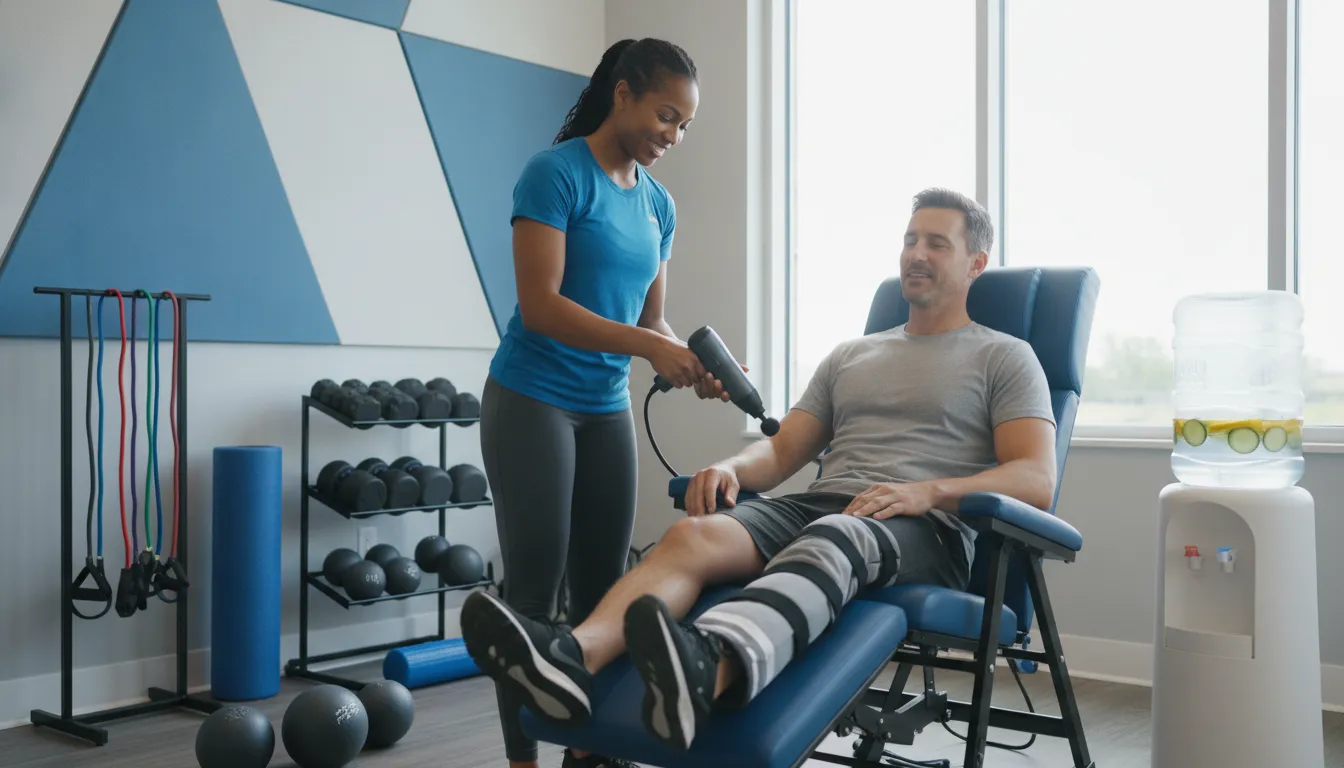
Effective gym staff training for recovery modalities combines practical modality knowledge, safe operating procedures, consultative sales conversations, and a simple scorecard for utilization and member adoption. The goal is not to turn every employee into a specialist. Instead, give each role enough clarity to guide the next step with confidence.
Train the front desk, sales team, trainers, and recovery technicians around one operating flow. Give managers ownership of the numbers. Before choosing scripts or scheduling refreshers, understand why capable facilities still leave expensive recovery rooms underused. The same business-first logic applies to recovery room design and activation for fitness facilities.
Why Staff Training Is the Most Common Reason Recovery Equipment Gets Underutilized
Buying recovery equipment creates capacity. It does not create demand, consistent service, or confident staff behavior. In many gyms, utilization stalls because the team is unsure how to explain a modality, when to recommend it, how to start a session, or what to do when a member asks a question outside the staff member’s expertise. The equipment remains available, but it never becomes part of the daily member journey.
That gap is especially costly for owner-operators managing one to five locations in facilities where every square foot and every scheduled service must earn its place. A recovery room can be well designed and fully equipped, yet still feel disconnected from the front desk, training floor, membership conversation, and daily schedule. The fix is not simply another sales push. It is an operating system that connects staff capability to a repeatable customer experience.
Assign ownership across the member journey
Recovery utilization should not belong to one enthusiastic trainer or a single recovery technician. General managers need to own the operating standard. Sales teams and front-desk staff need to recognize appropriate conversation openings and explain the service menu in plain language. Fitness directors and personal trainers need to connect the available options to a member’s goals and routine without making promises they cannot support. Recovery technicians need to deliver consistent setup, operating, cleaning, and closeout procedures.
Each role needs a clear handoff. For example, a trainer can introduce a member to the service, the front desk can schedule the session, and the technician can guide the experience. When no one owns the next step, interest disappears between recommendation and booking. When everyone owns a small, defined part of the flow, the room becomes easier to use and easier to manage.
Train for consistency, not just equipment familiarity
Equipment orientation is only the starting point. Staff training should cover the approved operating workflow, basic modality language, service-menu placement, member questions, escalation boundaries, and the records or checks required before and after a session. It should also include role-play. A team may understand a control panel and still struggle to explain the service clearly or set realistic expectations.
Use a simple standard for readiness. Every staff member should know what the equipment does, who the service is designed for within the facility’s policies, how to operate it safely, when to stop and escalate, and how to guide the member to a clear next step. That standard protects the member experience while giving managers something observable to coach.
This is why training belongs in recovery room activation, alongside programming, pricing, and measurement. The broader recovery room design and activation for fitness facilities should account for staff flow as carefully as equipment placement. Equipment alone does not create utilization. A trained team turns the room into a dependable business process.
What Core Knowledge Does Gym Staff Training for Recovery Modalities Need to Cover?
Effective gym staff training for recovery modalities is not a product walkthrough. It gives every person who touches the recovery experience enough context to explain the service accurately, operate equipment consistently, and recognize when a question belongs with a qualified professional. That includes general managers, sales teams, fitness directors, personal trainers, and recovery technicians, with role-specific depth for each group.
Modality purpose, boundaries, and the operating workflow
Staff should understand what each modality is designed to do within the facility, how it fits the member journey, and what it does not promise. Training should cover the basic operating concept, intended session flow, setup, controls, timing, user instructions, and approved service language. The goal is not to turn a trainer into a specialist. It is to give the team a clear, consistent explanation that supports informed participation without overpromising or making guaranteed-outcome claims.
Member expectations can vary by modality and by person. Staff should set practical expectations rather than make stronger claims. A useful explanation focuses on the experience, the session process, and how the service fits into a broader training and recovery routine.
The workflow should be teachable in the same order every time. Confirm the booking or service selection, prepare the space and equipment, explain the session, check understanding, monitor according to the facility’s procedure, close the session, and reset the area. Consistency protects the member experience and makes it easier for managers to identify where execution breaks down.
Safety, cleaning, maintenance, and escalation
Operational knowledge must include cleaning standards, consumable or accessory handling, inspection points, shutdown procedures, and basic troubleshooting. Staff should know which issues they can resolve from the operating guide and which require a manager, service technician, or other qualified expert. A simple escalation rule is more valuable than improvisation. Stop the session when the equipment or situation falls outside the approved procedure. Document what happened, and route the issue to the designated owner.
Training should also define responsibility by role. A recovery technician may own room readiness and session execution. A trainer may explain how the service fits around a workout. A sales team member may introduce the menu and next step without attempting to answer technical questions beyond their training. GMs need visibility into compliance, recurring equipment issues, and staffing gaps. This prevents the common failure mode where everyone is nominally responsible and no one is accountable.
Member experience and business context
Technical competence only matters if the service feels clear and organized. Staff need practice welcoming members, explaining what will happen, checking comfort, answering common objections, and closing with an appropriate next step. The conversation should be consultative: discover the member’s goals for the visit, explain the available service in plain language, and avoid pressure or exaggerated promises.
Finally, the team must understand why the workflow exists. Training should connect service menus, programming, pricing, utilization, revenue per session, membership adoption, and retention to the facility’s operating plan. Staff do not need to become financial analysts, but they should know how accurate setup, confident demos, clean handoffs, and reliable documentation affect adoption. That business context turns equipment operation into a repeatable capability rather than a collection of disconnected tasks.
Scripts and Selling Frameworks for Recovery Upsells at the Point of Service
A repeatable conversation keeps staff helpful, consistent, and commercially effective. The goal is not to push a session. It is to identify fit, explain the experience clearly, and make the next step easy for the member. Use this sequence during tours, check-ins, training-floor conversations, and post-workout interactions.
-
Start with discovery
Ask open questions before mentioning a modality. Learn what the member is trying to add to their routine, when they have time, and what kind of experience they prefer. Staff might say,
What are you hoping to get more from your recovery routine?
orHow much time do you typically have after training?
The answers establish context without assuming a specific outcome or making a health claim. -
Confirm fit
Match the member’s stated preference to the facility’s available service, operating requirements, and current programming. Keep the explanation practical:
Based on the time you have and the type of guided experience you want, this may be a good option to learn more about.
If the staff member cannot answer an equipment, safety, or eligibility question confidently, the correct response is to pause and escalate to the designated manager or qualified professional. Confidence should never mean improvisation. -
Explain the modality in plain language
Describe what the equipment does, how the session works. How long the visit takes according to the facility’s operating protocol, and what the member should expect during the experience. Avoid clinical terminology and promises such as
this will fix
orthis treats.
A useful script is:This service is designed as a structured recovery experience. We will walk you through the setup, explain the controls, and stay clear on what the session includes.
If the member raises a question outside the staff member’s role, staff should not diagnose or advise. They should follow the facility’s escalation policy. -
Demonstrate the experience
Show the member the entry point, preparation steps, controls, communication process, and end-of-session workflow. A demonstration should reduce uncertainty, not create urgency. Invite questions and explain which steps staff own. For example:
I can show you how we prepare the space, what you will be asked to do, and how to signal us during the session.
Use the same flow every time so the member experience remains consistent across shifts and locations. -
Set expectations before discussing the offer
Clarify the service format, booking process, available times, staff support, and any facility policies. Do not guarantee a personal result or imply that one session works the same way for everyone. When discussing packages or membership placement, connect the offer to the member’s intended routine rather than inventing savings, utilization, or revenue claims. The ROI Calculator can support the operator’s business planning, but staff should use approved service-menu language at the point of service.
-
Handle objections with clarification
When a member says,
I am not sure it is for me,
respond with curiosity:What part would you like to understand better?
For a time objection, explain the actual booking flow and offer an appropriate appointment window. For a results objection, be direct:We do not promise the same experience for every person. We can explain the service, answer operational questions, and help you decide whether it fits your routine.
Never counter uncertainty with pressure, exaggerated benefits, or unsupported comparisons. -
Close with one clear next step
End with an action that matches the conversation: schedule an orientation, book a first session, review the service menu, or speak with the recovery lead. Use language such as,
Would you like me to show you the available times and walk through the booking process?
Record the interaction according to the gym’s process so managers can review questions, objections, and follow-up needs. That feedback improves scripts and training over time.
Book a Strategy Call with ROI In Wellness
For operators, this framework turns gym staff training for recovery modalities into a daily operating behavior: discover. Match, explain, demonstrate, set expectations, respond honestly, and move the member to an informed next step.
Training Formats: One-Day Intensive vs Ongoing Program for Gym Staff
The right format depends on the facility’s launch stage, staff experience, number of modalities, and how much operating infrastructure already exists. A single session can create momentum, but durable adoption requires reinforcement, clear ownership, and a way to connect daily staff behavior to utilization and member experience.
Initial training may range from 8 to 20 or more hours, depending on the program. Delivery can combine onsite instruction with virtual refreshers, video libraries, written guides, and interactive learning modules. The goal is not to make every employee an equipment specialist. It is to give each role enough practical capability to explain the service accurately, run the workflow consistently, and know when to escalate a question.
| Format. | Best fit. | Core focus. | Reinforcement. |
|---|---|---|---|
| One-day intensive. | Fast launch or focused reset. | Demo flow, scripts, offers, revenue design. | 30-day follow-up. |
| Two-day integration. | New space or multi-modality launch. | Technical practice, signature flows, ROI tracking. | 90-day launch blueprint. |
| Ongoing coaching. | Consistency and performance improvement. | KPIs, campaigns, refreshers, onboarding. | Virtual and scheduled reviews. |
| Train-the-trainer. | Multiple locations or frequent hiring. | Internal delivery, standards, knowledge transfer. | Guides, videos, coaching tools. |
When a one-day intensive is enough
An 8-hour intensive can fit a gym that has selected its equipment, defined its service menu, and needs the team aligned before launch. A strong agenda should move beyond product features. It can include mindset, hands-on demonstration, sales scripting, membership conversion, and revenue design, supported by role-specific cheat sheets and launch-ready offers. This format works best when a manager owns the follow-through and staff can practice the workflow immediately.
When business integration deserves more time
A two-day format is more appropriate when the team must build technical confidence and a repeatable operating model at the same time. In addition to hands-on equipment training, the work can cover signature recovery flows, objection handling, ROI tracking, and a 90-day launch blueprint. That extra time gives managers space to test the member journey, clarify responsibilities, and resolve operational gaps before they become inconsistent habits.
How to make training stick after launch
Ongoing coaching is the reinforcement layer, not a substitute for a clear initial standard. Use short refreshers, recorded demonstrations, written procedures, and scheduled reviews to keep delivery consistent. Review the same measures the business cares about, such as utilization, revenue per session, membership adoption, and retention impact. Train-the-trainer adds leverage for multi-location gyms or teams with regular hiring. An internal leader can onboard new staff without resetting the entire program. Whichever format you choose, document the expected workflow and assign an owner for reviewing it. Training becomes part of the business system when new hires, promotions, campaigns, and performance reviews all use the same operating standard.
How to Measure Staff Performance on Recovery Modality Adoption
Training is not complete when staff can explain a modality or start a session. It is complete when the team can create a consistent member experience and the business can see whether that experience is being adopted. Build the scorecard before launch, assign an owner for each measure, and review the results on a predictable cadence.
Start with four business measures
Use the same baseline and reporting period across locations, modalities, and membership types. The core measures in the implementation framework are:
- Utilization: Track booked sessions or occupied operating capacity against the time available. Break the number down by modality and by location so an average does not hide an underused asset.
- Revenue per session: Measure the revenue generated per completed session, using the same handling of discounts, memberships, and bundled services each period. This helps operators evaluate pricing and packaging without relying on top-line revenue alone.
- Membership adoption: Track how many eligible members add a recovery service or membership option, then compare adoption by offer, staff role, and member segment. The purpose is to identify which explanations and offers produce qualified interest, not to pressure every member into a purchase.
- Retention impact: Compare retention patterns for members who adopt the service with the appropriate business baseline. Treat this as an observation to investigate, not proof that a modality caused a member to stay. Other factors, including coaching, attendance, pricing, and overall experience, may influence the result.
Add recommended operational measures
The following are recommended operating metrics that make the core scorecard easier to manage. They are not customer promises or universal benchmarks:
- Demo-to-booking conversion: The share of completed demonstrations that lead to a booked session within a defined period.
- Repeat usage: The percentage of first-time users who return for another session. Review this with member feedback so the team can distinguish a weak follow-up process from a poor service fit.
- Operating accuracy: Use a short observation checklist for setup, session flow, cleaning, documentation, and escalation steps. Score the process consistently rather than judging staff on personality.
- New-hire onboarding time: Record how long it takes a new team member to complete training, demonstrate the required workflow, and operate independently under your internal standards.
Turn the scorecard into coaching
Review results by role and workflow, not just by employee. Low utilization may indicate weak scheduling or unclear programming. Low demo-to-booking conversion may point to a discovery or expectation-setting gap. Operating errors may require a refresher, a clearer checklist, or better equipment access. Give managers one or two corrective actions per review cycle, then check whether the measure changes.
For a facility-level planning view, operators can use the ROI Calculator to model assumptions before committing to a target. Keep the model separate from observed performance, and update it with actual session, membership, and retention data as the program develops.
Frequently Asked Questions
What should gym staff learn before they operate recovery equipment?
Staff should learn what each modality is designed to do, who it serves, the approved operating workflow, cleaning and reset procedures, and the boundaries of their role. Training should also cover how to explain the experience in plain language, set expectations, recognize an issue, and escalate questions to the appropriate qualified professional. Every team member should know who owns setup, coaching, sales, maintenance, and follow-up.
How long does training for recovery modalities take?
There is no single correct duration. A focused onboarding may cover the essential workflow in one session, while a broader rollout needs hands-on equipment practice, sales coaching, programming, troubleshooting, and measurement. The right schedule depends on the number of modalities, staff roles, operating hours. And whether the team needs to launch a new service menu or improve an existing one.
Is one day of training enough for a gym team?
One day can establish the operating standard and give staff a repeatable demo and sales flow, but it should not be treated as the end of training. Managers should follow it with supervised practice, observation, refreshers, and a clear process for onboarding new hires. A train-the-trainer model can help keep execution consistent across shifts and locations.
How can staff avoid overpromising recovery outcomes?
Use discovery questions first, describe the equipment and session experience accurately, and avoid guarantees or unsupported health-related claims. Staff should explain that expectations can vary by modality and individual, then focus the conversation on fit, comfort, programming, and the member’s goals. When a question exceeds the team’s scope, the correct response is to pause and refer it appropriately.
What should gym owners measure after training?
Start with utilization, revenue per session, membership adoption, and retention impact. Recommended operating measures include demo-to-booking conversion, repeat usage, operating accuracy, staff confidence, and time to onboard new hires. Review the scorecard regularly by modality and by staff role so owners can identify whether the constraint is training, programming, pricing, scheduling, or the member experience.
Turn Training Into a Recovery Business System
Training works best when it connects staff capability to daily operations, member conversations, and measurable utilization. A focused planning discussion can help you map the right training roles, modality workflows, sales standards, and activation measures for your facility.
Book a Strategy Call to plan staff training, recovery modality operations, and a measurable activation system for your gym.