Modality Profile
Cold Plunge
One of the strongest starter modalities in commercial wellness right now — lower capital cost than whole body cryotherapy, with comparable member appeal.
- Equipment, by configuration
- $5K–$60K+
- Footprint incl. transition space
- 40–80 sq ft
- Typical session price
- $20–$40
- Staffing — self-serve after orientation
- Low
What This Modality Is
Cold water immersion, temperature-controlled
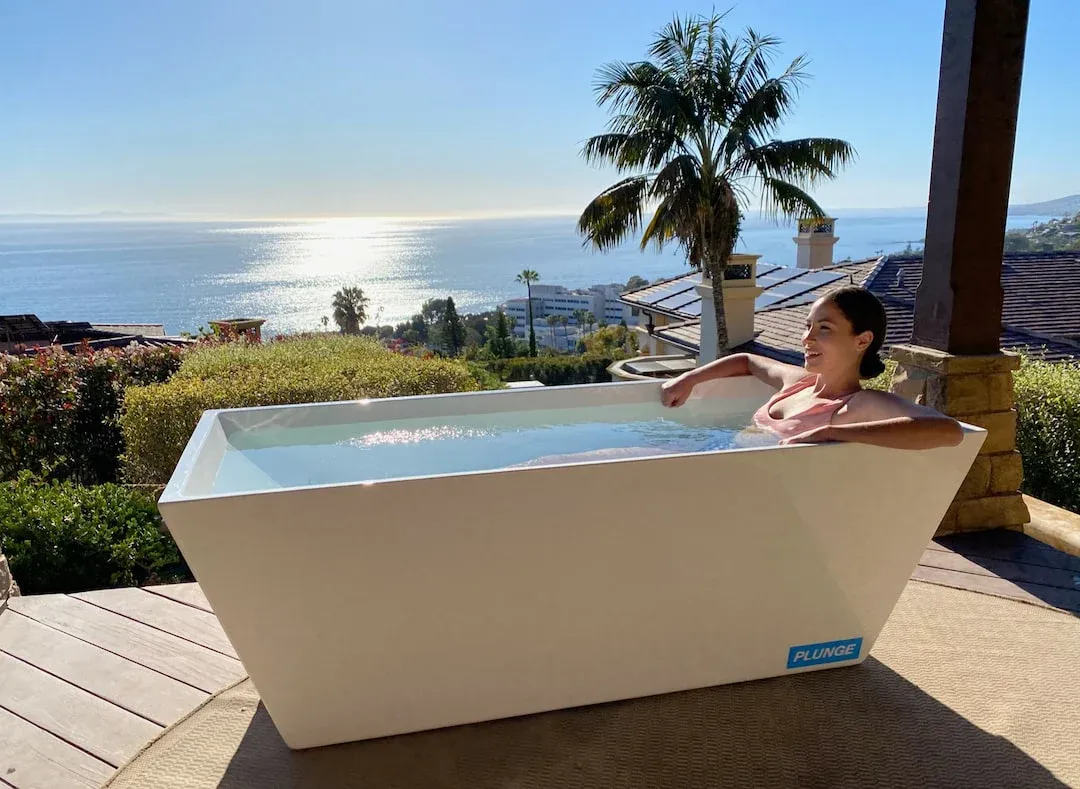
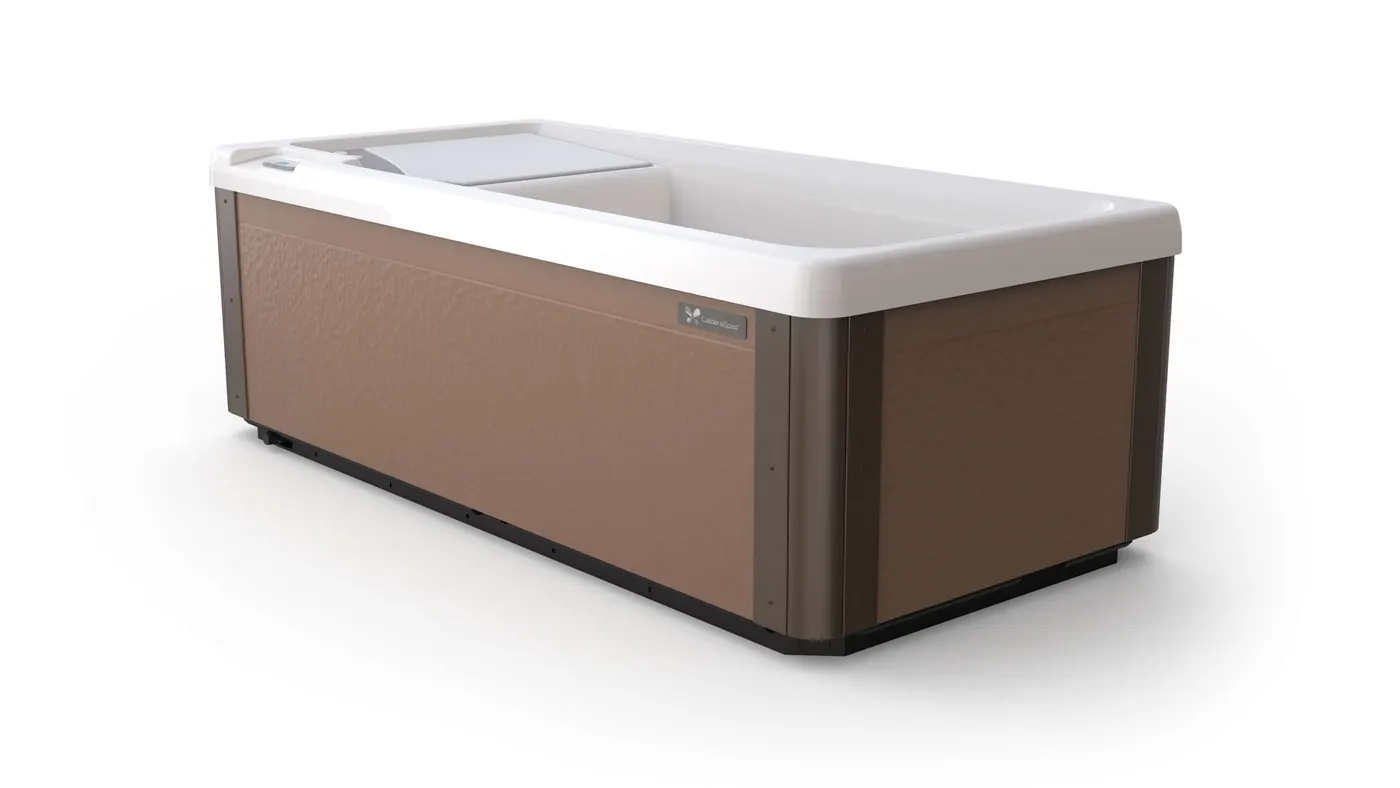
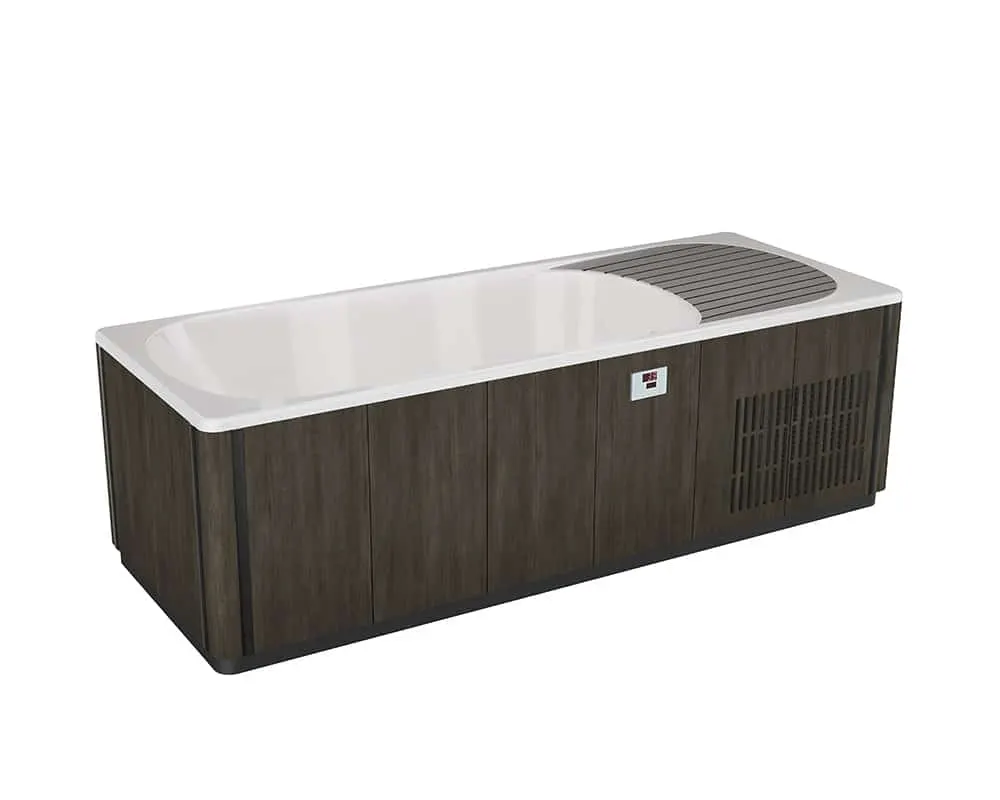
Cold plunge is full-body or partial-body immersion in cold water, typically maintained between 39°F and 55°F (4°C–13°C). Commercial units include water filtration, sanitation systems, and chillers to hold target temperature continuously through repeated daily use.
How It Works
Fast vasoconstriction, short sessions
Cold water immersion triggers an immediate vasoconstriction response and significant sympathetic nervous system activation. Sessions are short — typically 1–10 minutes. Cold plunge has seen major popularity growth driven by biohacker culture and high-profile public advocates.
What it costs to add, and where it fits.
Capital Cost & Space Planning
Equipment & Capital Cost
- Entry-level commercial unit
- $5,000–$10,000
- Mid-range, quality filtration
- $10,000–$20,000
- Premium, advanced filtration & finish
- $20,000–$35,000+
- Custom built-in installation
- $20,000–$60,000+
Space, Power & Installation
- Footprint: 40–80 sq ft including step access and member transition space
- Drainage required for water changes and overflow
- Chiller typically requires a dedicated 220V circuit
- Floor support is critical — water plus member weight can exceed 1,500 lbs concentrated load
- Standard HVAC is adequate
- Plan a transition area: bench, towel storage, ideally an adjacent shower
Where cold plunge fits in your lineup.
Stack Positioning
Cold plunge is currently one of the strongest starter modalities in commercial wellness — lower capital cost than whole body cryotherapy with comparable member appeal. It often replaces or directly competes with WBC in budget-conscious builds, and pairs naturally with sauna (as a contrast-therapy offering), red light therapy, and compression.
Where facilities lose money on this modality.
Common Operator Mistakes
- Skimping on filtration — water quality issues kill the experience and accelerate member churn
- No protocol or member orientation — members enter without understanding safety, breathing, or expected experience
- Single plunge becomes bottleneck during peak hours — plan capacity for facility size
- Failing to maintain target temperature consistently (chiller capacity must match expected usage volume)
- Ignoring water chemistry tracking — daily testing is standard commercial practice
- Buying residential-grade units for commercial use
Who actually uses this, and why it matters.
Member Adoption Patterns
Strong cultural tailwind
Broad demographic appeal across age groups, with particularly strong interest from biohacker, athletic, and wellness-curious segments.
High initial adoption
Trial rates are high out of the gate — cultural momentum is doing real work here.
Retention is experience-driven
Conversion to ongoing use depends on water clarity, temperature consistency, and transition comfort.


What to check before you buy.
Vendor Selection Principles
- Chiller capacity rated for commercial use, not residential
- Filtration system specifications and maintenance requirements clearly documented
- Construction materials with a commercial duty cycle warranty
- Service network availability for chiller repairs
- Sanitation system included or clearly specified
- Target Temperature
- 45°F–50°F (7°C–10°C) is the broadest-appeal range for general member use. 39°F–45°F (4°C–7°C) is preferred by experienced cold-exposure users. Let member skill level, not personal preference, dictate the facility setting.
What operators usually ask.
Common Questions
Cold plunge versus whole body cryotherapy — which should a facility choose?
Cold plunge is significantly lower capital cost, lower per-hour throughput, and requires less staffing. WBC has higher capital cost, higher throughput, mandatory staffing, and arguably higher premium positioning. Many facilities operate both as complementary offerings.
How is water sanitation managed?
We answer this one live so it fits your facility. Ask us directly and we’ll walk you through it.
What’s the optimal target temperature?
We answer this one live so it fits your facility. Ask us directly and we’ll walk you through it.