Modality Profile
Commercial Massage Chairs
An easy, broadly-appealing addition to almost any wellness offering — low staff burden, low capital cost relative to other modalities, and it pairs with everything.
- Equipment, by configuration
- $3K–$25K+
- Footprint for standard units
- 40–60 sq ft
- Typical standalone session price
- $10–$25
- Ongoing staffing — orientation only
- Zero
What This Modality Is
Self-serve seating that runs programmed routines
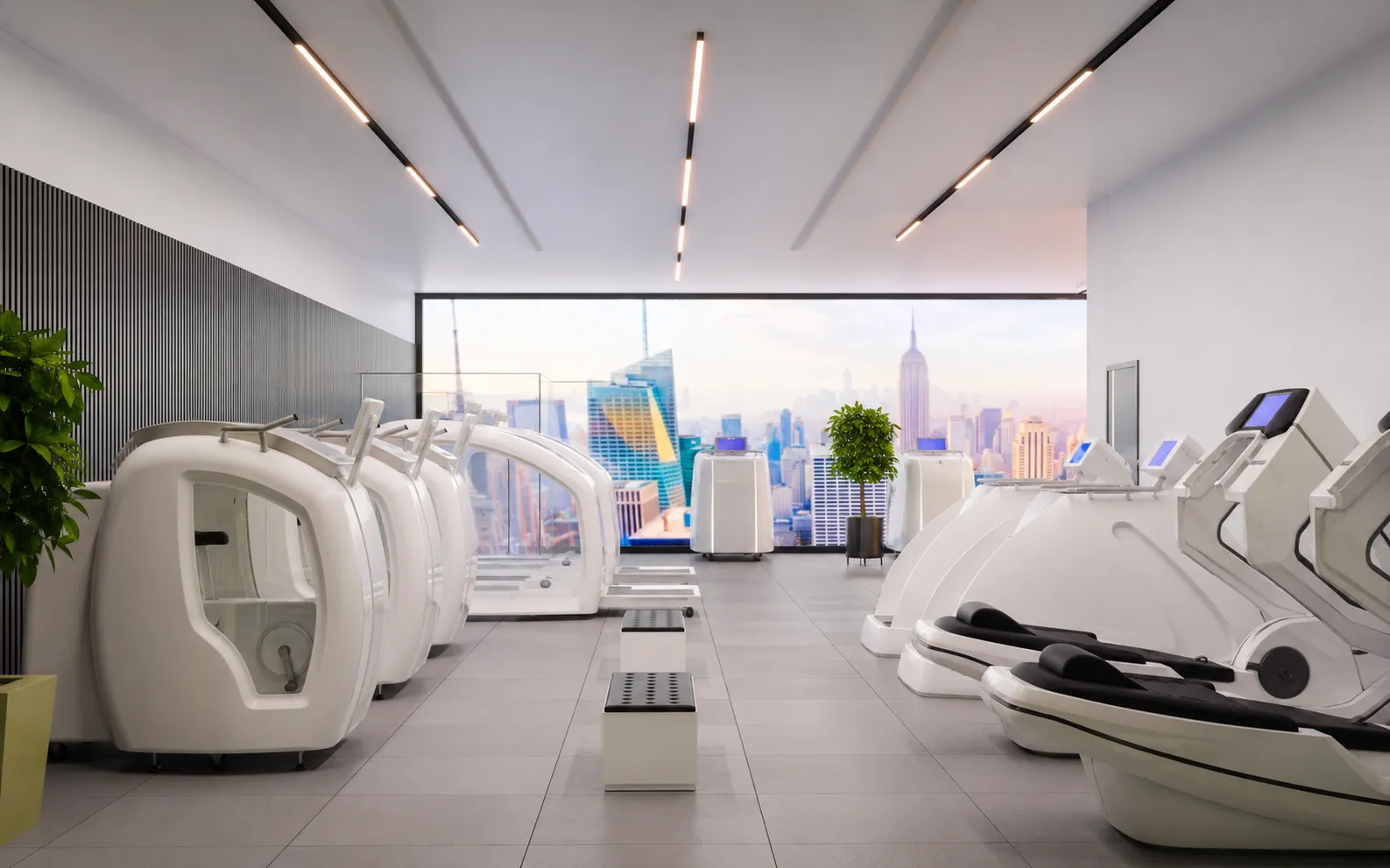
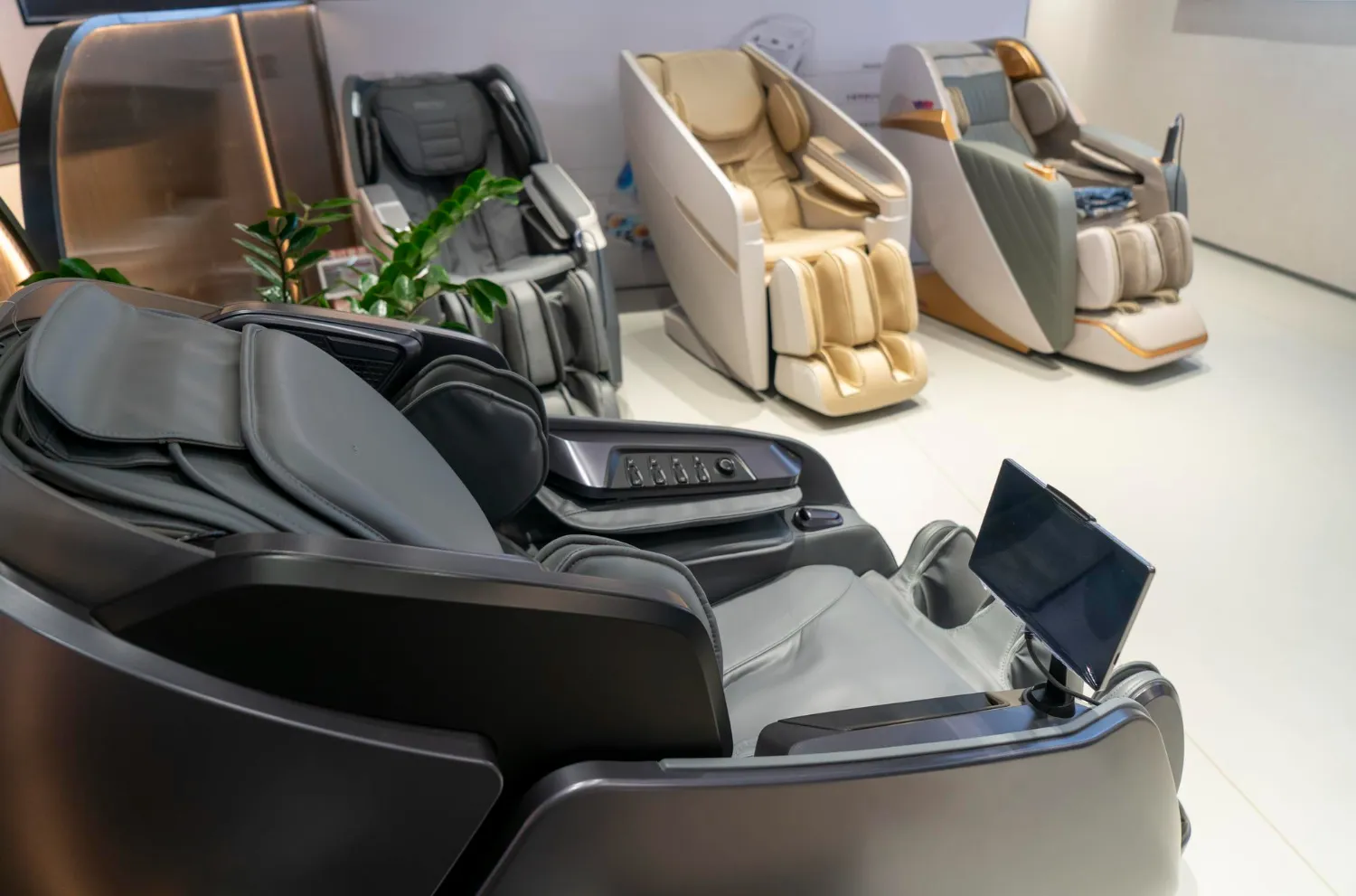
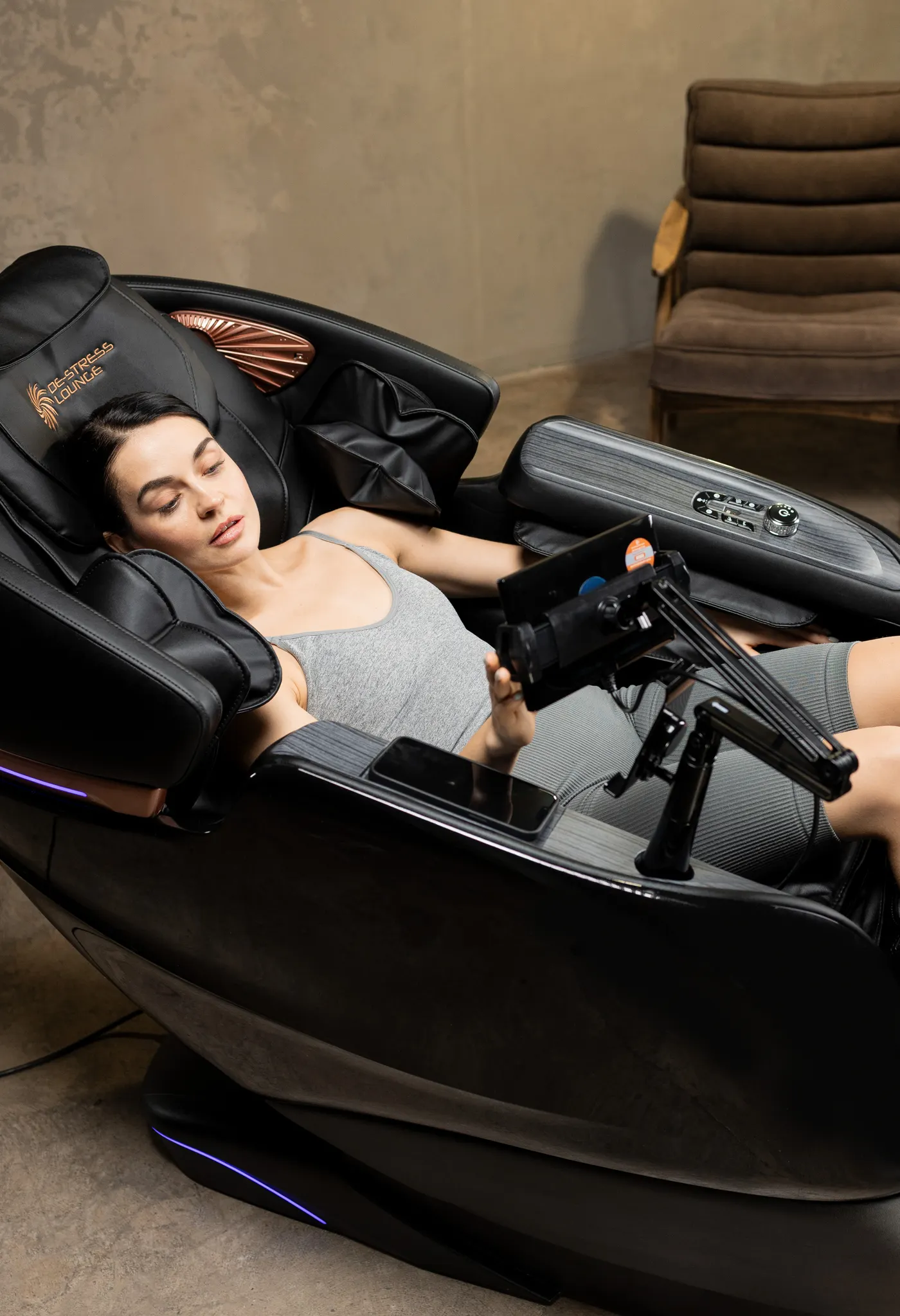
Commercial massage chairs are self-serve seating units that deliver programmed massage routines through mechanical rollers, airbag compression, heating elements, and sometimes additional features — zero-gravity positioning, body scanning, calf and foot massage, audio integration.
How It Works
Rollers and airbags, fully self-serve
Internal roller mechanisms move along the user’s back following programmed paths, while airbags inflate to compress arms, legs, hips, and shoulders. Users select from preset programs by duration and focus area. Sessions are entirely self-serve once members have basic orientation.
What it costs to add, and where it fits.
Capital Cost & Space Planning
Equipment & Capital Cost
- Mid-tier commercial chair
- $3,000–$7,000
- Premium commercial chair
- $8,000–$15,000
- Top-tier, full-feature, body-scanning
- $15,000–$25,000+
Space, Power & Installation
- Footprint: 40–60 sq ft per chair, including reclined-position clearance
- Power: standard outlets
- Flooring: stable surface required — chairs weigh 200–400+ lbs
- No special ventilation or installation requirements
Where massage chairs fit in your lineup.
Stack Positioning
Massage chairs are an easy and broadly-appealing addition to almost any wellness offering: low staff burden, low capital cost relative to other modalities, and high member satisfaction. They’re often used as a member retention driver rather than a primary revenue line, and pair with everything in the stack.
Where facilities lose money on this modality.
Common Operator Mistakes
- Buying consumer-grade chairs to save capital — inevitable failure within 6–12 months wastes the investment.
- Placing chairs in low-visibility areas where members don’t see them.
- No timer or turnover system — a single member occupies the chair for excessive duration.
- Insufficient chair count — wait time during peak hours destroys perceived value.
- Skipping basic sanitation between users.
Who actually uses this, and why it matters.
Member Adoption Patterns
Universal appeal
Both athletic and general wellness members engage — this modality does not skew toward a narrow segment.
Passive recovery draw
Particularly strong with members who want passive recovery options that require no instruction or skill.
Retention driver
Often functions as a member retention driver — small daily moments of comfort that members associate with their gym membership.


What to check before you buy.
Vendor Selection Principles
- Commercial-grade duty cycle warranty — residential warranties typically void under commercial use
- Local service availability for repairs (chairs are heavy and difficult to ship)
- Replacement parts availability
- Member experience features: program variety, comfort, upholstery durability

What operators usually ask.
Common Questions
Commercial chair vs. consumer chair — what’s the difference?
Commercial chairs are engineered for 8–12 hours of daily use across multiple users. Consumer chairs are engineered for occasional household use. Consumer chairs typically fail within 6–12 months of commercial use, voiding warranty and wasting the capital investment.
How long should a session be?
We answer this one live so it fits your facility. Ask us directly and we’ll walk you through it.
How should sanitation be handled?
We answer this one live so it fits your facility. Ask us directly and we’ll walk you through it.