Modality Profile
Infrared Sauna
A popular and accessible foundation modality with broad demographic appeal, a lower entry cost than many recovery modalities, and simple self-serve operation.
- Equipment, by configuration
- $4K–$40K+
- Footprint for standard units
- 30–60 sq ft
- Typical session price
- $25–$50
- Staffing — self-serve after orientation
- Low
What This Modality Is
A heated cabin that warms the body directly
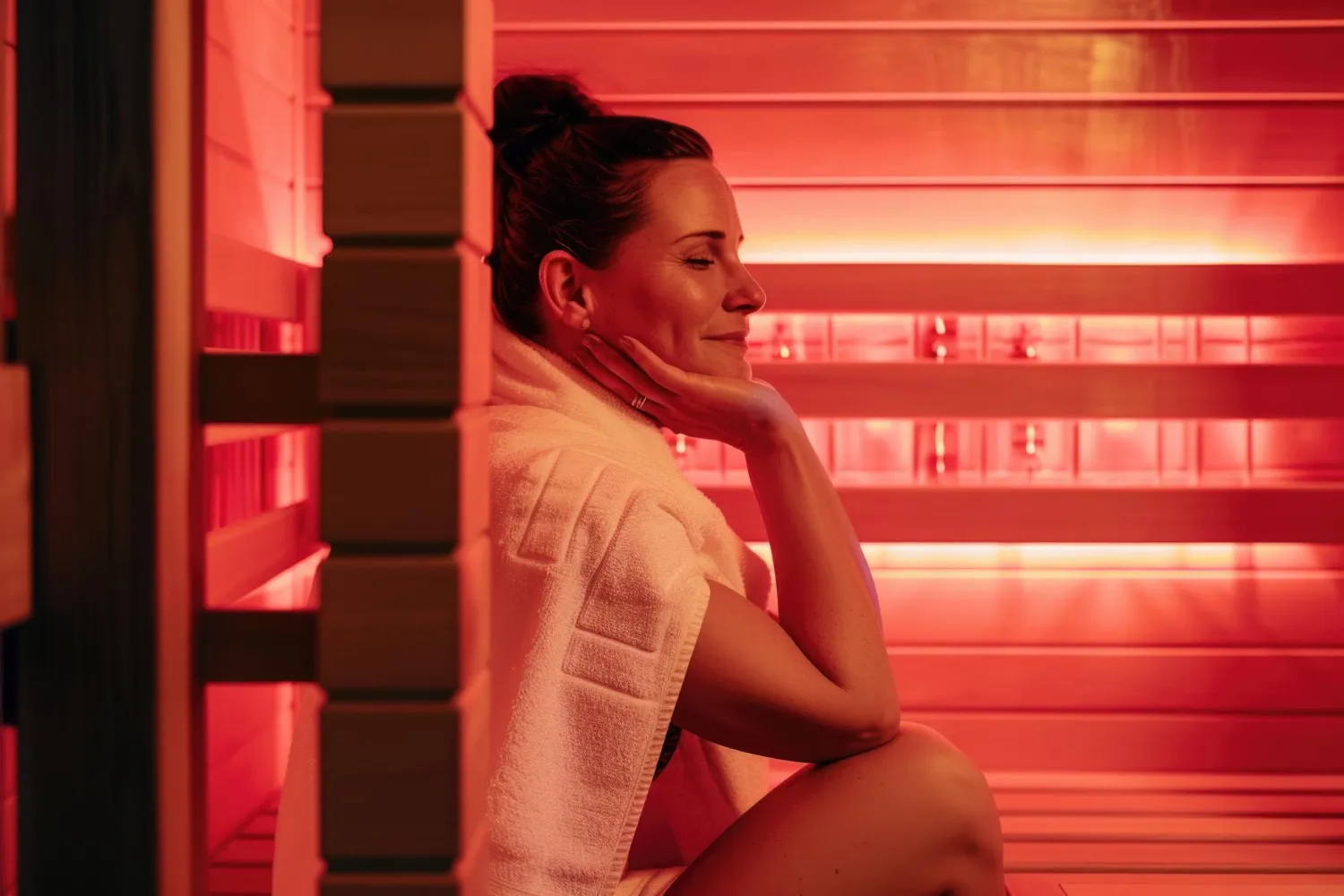
An infrared sauna is a heated cabin that uses infrared light emitters to warm the body directly, rather than heating the surrounding air as a traditional Finnish sauna does. Operating temperatures run lower — typically 110°F–150°F versus 160°F–200°F for traditional saunas — but session durations are typically longer. Units come in three sub-categories by wavelength: far infrared (most common in commercial wellness), near infrared, and full spectrum, which combines near, mid, and far infrared.
How It Works
Direct absorption at lower ambient temperature
Infrared light penetrates the skin and is absorbed by the body, generating heat from within. This produces sweating and elevated core temperature at lower ambient air temperatures than traditional saunas. The user experience is generally described as more tolerable than traditional sauna for longer durations.
What it costs to add, and where it fits.
Capital Cost & Space Planning
Equipment & Capital Cost
- Single-person commercial unit
- $4,000–$8,000
- Two-person commercial unit
- $5,000–$10,000
- Three-person and larger commercial unit
- $8,000–$15,000
- Premium, full-spectrum, advanced features
- $12,000–$25,000
- Custom built-in installation
- $15,000–$40,000+
Space, Power & Installation
- Footprint: 30–60 sq ft for standard units
- Ceiling height: 7′ minimum
- Power: many smaller units run on standard 110V; larger units require a dedicated 220V circuit
- Ventilation required for moisture and heat management, with HVAC implications for surrounding facility space
- Standard flooring is fine, but heat-resistant material is recommended adjacent to the unit
- Member changing/shower facilities recommended nearby
Where infrared sauna fits in your lineup.
Stack Positioning
Infrared sauna is a popular and accessible foundation modality: lower entry cost than many other recovery modalities, broad demographic appeal, and easy operation. It pairs naturally with cold plunge for contrast therapy applications and with red light therapy as part of a relaxation-focused service line.
Where facilities lose money on this modality.
Common Operator Mistakes
- •Buying consumer-grade units for commercial use — duty cycle and warranty terms differ significantly
- •Underestimating cleaning workload — towels, surface sanitization, and odor management require active protocols
- •Failing to differentiate far infrared, near infrared, and full spectrum in marketing — sophisticated members care about specifics
- •Inadequate ventilation planning, leading to humidity issues in surrounding facility space
- •Single unit becomes peak-hour bottleneck — plan capacity for facility scale
Who actually uses this, and why it matters.
Member Adoption Patterns
Broad demographic appeal
Historically strong adoption among older members and women in particular, with the demographic expanding significantly in recent years.
Comfort-driven preference
Members appreciate the lower-intensity, longer-duration experience compared to traditional sauna.
Cultural awareness growing
Increased mainstream awareness has widened the appeal well beyond the original core demographic.


What to check before you buy.
Vendor Selection Principles
- Commercial-grade duty cycle warranty
- Wavelength specifications transparent and verifiable
- EMF emissions data available — sophisticated buyers ask
- Wood quality and emitter quality — cheap units degrade quickly
- Service availability for emitter replacement
What operators usually ask.
Common Questions
Far infrared vs near infrared vs full spectrum — does it matter?
Far infrared is most common in commercial wellness and produces the deepest perceived heat. Near infrared is marketed for cellular benefits but penetrates less. Full spectrum combines wavelengths but typically at higher capital cost. Most commercial buyers select far infrared or full spectrum.
How does infrared compare to traditional Finnish sauna?
We answer this one live so it fits your facility. Ask us directly and we’ll walk you through it.
How is sanitation handled between users?
We answer this one live so it fits your facility. Ask us directly and we’ll walk you through it.